
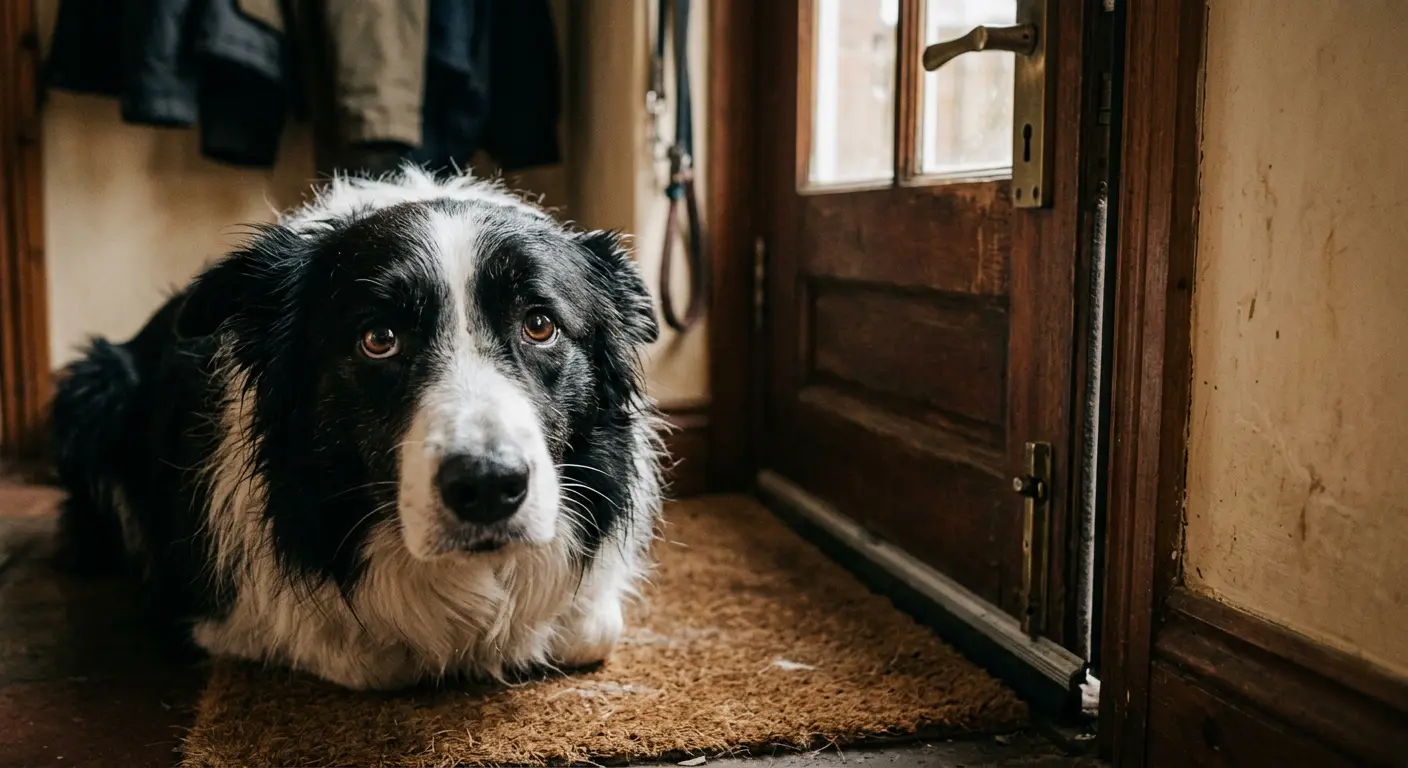
There's a science-backed way to fix it at home — no trainers, no medication, no guesswork. And it works in as little as 6 weeks.
See How It Works
Instant digital download • Works for all breeds
"I used to sit in my car in the driveway, crying, listening to my dog howl on the other side of the door. I was five minutes late to work every single day because I couldn't bring myself to leave."
That was Sarah, a 34-year-old nurse from Ohio. Her two-year-old rescue, Benny — a border collie mix with the biggest brown eyes you've ever seen — had separation anxiety so severe that her neighbors had started leaving notes on her door.
The howling would start within 30 seconds of the front door closing. And it wouldn't stop for hours.
She'd come home to shredded blinds, scratched-up door frames, and a dog so frantic he'd sometimes urinate the moment she walked in — not from lack of training, but from sheer relief.
Sound familiar?
If you're reading this, you probably know exactly how Sarah felt. The guilt of leaving. The anxiety about what you'll come home to. The helpless feeling of watching your dog fall apart — and not knowing how to fix it.
Your dog isn't being dramatic. He isn't punishing you for leaving. And he definitely isn't doing it out of spite.
What's actually happening is a genuine neurological panic response — the canine equivalent of a panic attack. When you leave, your dog's brain floods with stress hormones. His nervous system fires as if something life-threatening is happening.
And from his perspective? It is.
Veterinary behaviorists estimate that separation anxiety affects 20–40% of all dogs — making it one of the most common behavioral problems. Yet most owners are still getting terrible advice:
 "Just crate him" — which often makes the panic worse"Get a second dog" — which usually just gives you two anxious dogs"Leave the TV on" — nice idea, but it doesn't address the root cause"He'll grow out of it" — he won't. Anxiety typically gets worse over time"Hire a $200/session trainer" — effective, but not accessible for most people
Sarah tried all of it. The ThunderShirt. The calming treats. Two different trainers at $175/hour. Nothing stuck. She was starting to wonder if she'd made a mistake adopting Benny at all.
Then she found The Calm Dog Method.
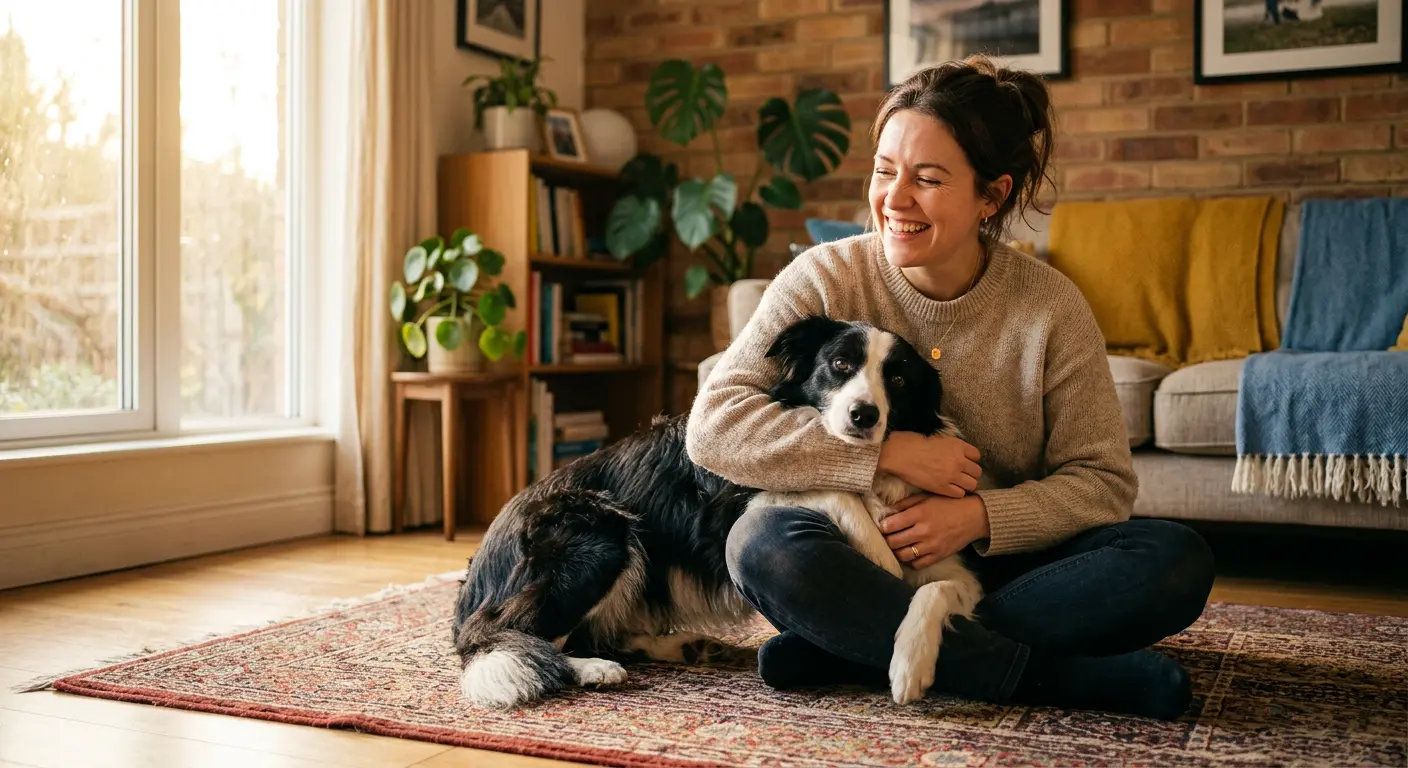
6 weeks later: calm departures, no more howling, no more guilt.
The Calm Dog Method isn't a bag of tricks or a band-aid. It's the exact same approach recommended by the ASPCA, veterinary behaviorists, and certified applied animal behaviorists — distilled into a clear, step-by-step protocol you can follow at home.
It's built on two evidence-based techniques with decades of research behind them:
Exposing your dog to departures in increments so small they don't trigger anxiety — then gradually increasing the duration. You're proving to your dog's nervous system, repetition by repetition, that being alone is safe.
Changing your dog's emotional association with your departure — from "something terrible is happening" to "something good is happening" — by pairing departures with things your dog genuinely loves.
Used together, these techniques don't just mask the symptoms. They retrain your dog's emotional response at the root level.
For Sarah, it took 5 weeks. By week 2, Benny stopped reacting to her picking up keys. By week 4, she could leave for 30 minutes without a single bark. By week 6, she walked out the front door and Benny just… went to his bed. And stayed there.
"I literally cried — but this time it was because I was happy," she told us.
93%
saw meaningful improvement within 6 weeks
4.8★
average rating from over 2,400 reviews
14K+
dog owners have used this method
Before
Howling and barking for hoursDestroyed furniture & door framesNeighbor complaintsGuilt every time you leaveHouse soiling despite trainingAfter
 Calm, quiet departuresA dog who settles on his ownPeace of mind while you're awayFreedom to live your life againA happier, more confident dog
This isn't a 200-page textbook. It's a focused, actionable guide designed to get your dog from panicking to peaceful in 6 weeks. Here's the step-by-step protocol:
Identify the exact departure cues that set your dog off — keys, shoes, coat, bag. Most owners don't realize the anxiety starts long before they reach the door.
Strip those triggers of their meaning through "uncoupling" — so your dog sees you grab your keys and feels nothing. This alone often produces visible results in 5–7 days.
Teach your dog to self-settle on a designated spot. Many anxious dogs have literally never learned to relax on their own. This step makes everything else possible.
The core of the method. Practice leaving in tiny increments — seconds at first, building to minutes, then hours. There's a specific weekly schedule so you never have to guess.
Lock in the new behavior for good. Includes a maintenance schedule and what to do if anxiety returns after stressful events (it won't feel like starting over — promise).
Plus: a complete 6-week training schedule, the 5 mistakes that stall progress (most owners make at least 2), and an honest breakdown of what tools actually work vs. what's overhyped marketing.

This is what "after" looks like. A dog who is genuinely at peace when you're gone.
You don't have to keep feeling guilty every time you walk out the door.
Get The Method Now
"We were about to put our Lab on medication. Decided to try this first. By week 3, the howling stopped completely. By week 5, we could leave for 2 hours and come home to a sleeping dog. I wish I'd found this a year ago."
Michelle R.
Lab owner, Denver CO
 Verified Buyer
"My rescue beagle destroyed three crates and two sets of blinds. I'd literally rearranged my entire life around not leaving him alone. This guide gave me my freedom back. Step 2 alone was a game-changer — I never knew about cue desensitization."
James K.
Beagle owner, Austin TX
Verified Buyer"I'm a vet tech and was skeptical of a PDF solving what I see trainers charge $3,000+ for. But this is genuinely the same behavioral protocol we recommend — just laid out better than anything I've seen. Bought copies for three of my clients."
Dr. Lisa M.
Veterinary Technician, Portland OR
Verified Buyer"We went back to the office after 2 years of WFH. Our Aussie completely fell apart. This method saved us. The graduated departures section is brilliant — you can literally see your dog getting more confident each day."
Amanda & Pete S.
Australian Shepherd owners, Seattle WA
Verified Buyer "My dog's anxiety is really severe. Can a PDF really fix this?"
This guide is designed for mild to moderate separation anxiety — which is the vast majority of cases. For severe cases, the guide actually recommends when and how to incorporate medication alongside the behavioral protocol. But here's the thing: even dogs on medication need behavioral training to see lasting results. This guide gives you that training.
"I've tried training before and nothing worked."Most people fail because they skip straight to practicing departures without first defusing the departure cues — so the dog is already panicking before they even reach the door. Or they go too fast and accidentally reinforce the anxiety. This guide specifically addresses the 5 most common mistakes and builds in safeguards so you don't repeat them.
"I don't have hours every day for training."You don't need hours. Most of the exercises take 10–15 minutes and are designed to be sprinkled throughout your normal day. The cue desensitization, for example, is literally picking up your keys and putting them back down while you watch TV. The consistency matters far more than the duration.
"Will this work for my breed?"Yes. Separation anxiety is a neurological response, not a breed-specific behavior. The method works on the dog's nervous system regardless of breed. Herding dogs, hounds, toy breeds, retrievers, mixed breeds — the protocol is the same because the underlying neuroscience is the same.
"Shouldn't I just hire a professional trainer instead?"A qualified behaviorist can absolutely help — and charges $150–$300 per session, usually recommending 8–12 sessions. That's $1,200–$3,600. This guide contains the same evidence-based protocol they'd use. If you can follow clear, step-by-step instructions, you can do this yourself. If you hit a wall, the guide tells you exactly when it makes sense to bring in professional help.
You pick up your keys. Your dog doesn't flinch.
You put on your shoes. He glances up, then goes back to his chew toy.
You open the front door, say a calm goodbye, and walk out. No howling. No scratching. No guilt twisting in your stomach.
You check your camera from work — and he's asleep on his bed.
That's not a fantasy. That's what happens when you address the root cause instead of the symptoms.
Sarah got there. Michelle got there. James got there. Fourteen thousand other dog owners got there. And you can too.
The only difference between where you are now and where they are? They decided to start.
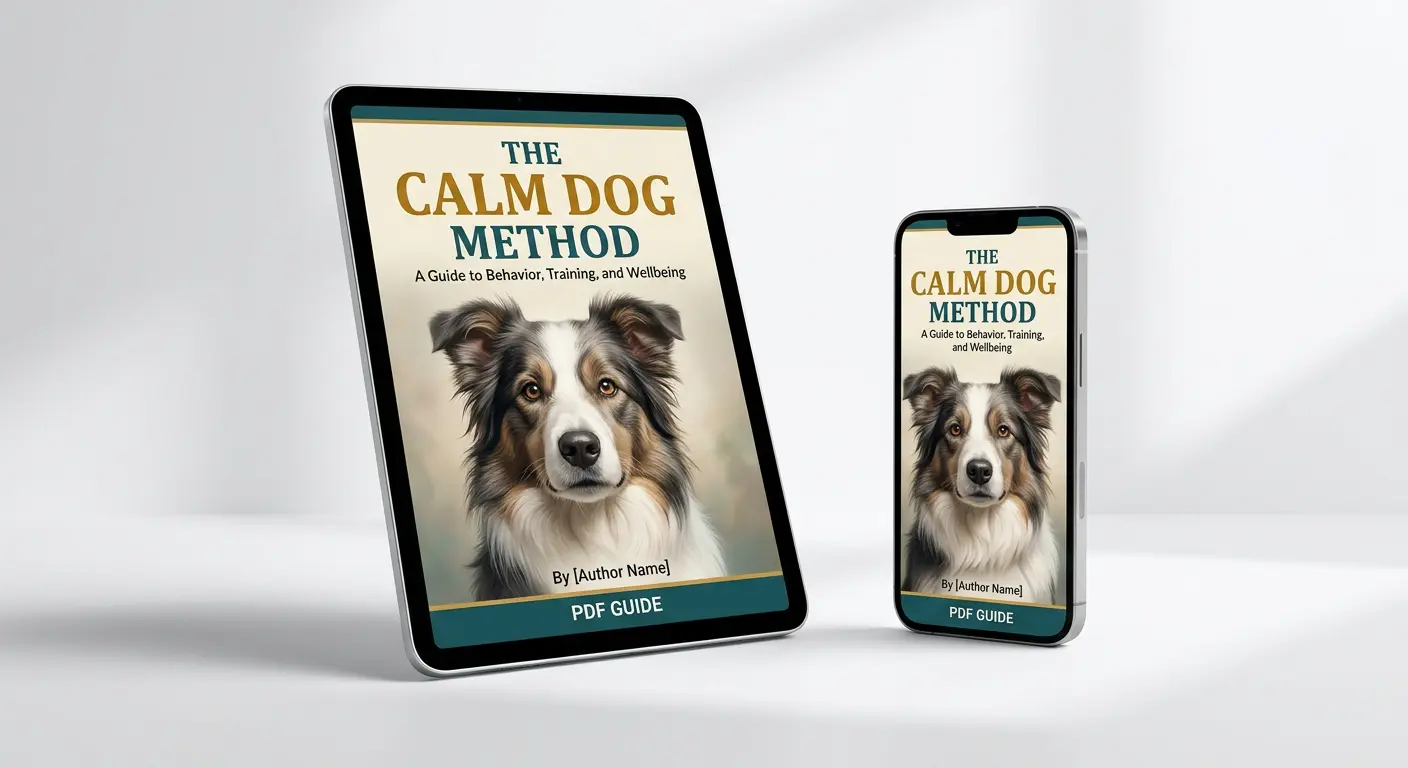
The complete, science-backed protocol to fix your dog's separation anxiety at home. No trainers needed. No medication required. Results in 6 weeks.
Yes — I Want to Help My Dog Instant Download
 60-Day Guarantee
 14,000+ Happy Owners